Astral Sovereignty home
Two galaxies live — free to play

A slow galaxy for people who'd rather think than click.

You rule one empire inside a persistent galaxy, starting with a single homeworld and a fog-of-war map. Give your orders, and at a scheduled moment the galaxy resolves them all at once.

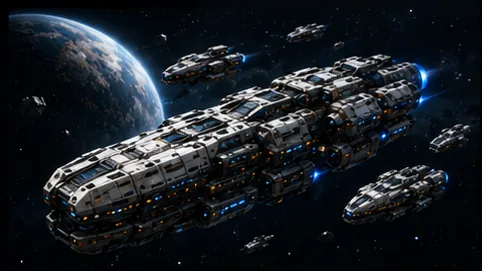
A capital ship and its escorts holding position above a planet.
ExploreExpandDevelopCompete
What's in the game today

Everything below is built and running

Not a pitch deck. These are the systems the galaxy runs on right now, described the way you will meet them. A galaxy chooses which systems it runs: Astral Dawn runs every one below, and Sovereign Reach 1 runs without research, fuel, races and free-form design.

Worlds that are hostile to you specifically

Every planet and moon is described across six environmental axes: temperature, pressure, atmosphere, gravity, radiation, toxicity. Every species has its own comfort range on each, set by the homeworld it evolved on. There is no universal good planet, only worlds that suit you or kill you, and two players can look at the same rock and reasonably disagree.

One structure answers one axis

Settle somewhere hostile and your colonists start dying, unless you build the specific structure that answers that specific problem. Nothing is a general-purpose fix, and each structure protects only so many colonists — a growing colony keeps building. A world that is wrong in three ways needs three answers. A harsh world is a real option, just a permanently expensive one.

Population that actually lives there

Colony population is simulated every tick, not stored as a number that ticks up. It grows where you have built the housing to support it and dies where you have not sheltered it, and when it has room to grow, it never grows by exactly the same amount twice. Two colonies founded on the same day drift apart. You can load colonists onto ships and move them, which is how you get a young colony on its feet instead of waiting years of ticks.

Ground war, not just space battles

Orbit is not ownership. You train garrisons of infantry, armour and artillery, carry them on troop transports, and land them. An invasion resolves over two ticks: you establish a beachhead, and the fight resolves after. The defender gets a tick to react, which makes invading a commitment rather than a click.

Officers you recruit and post

On galaxies with research, an academy at one of your colonies offers officers to recruit. Post one to a fleet that carries a Command Bridge, or to a colony's industry, and they gain experience for the battles, journeys and production they take part in. An officer whose last ship is retired at your own colony steps ashore; one whose ship is destroyed is lost with it.

Structures in orbit

On galaxies with research, you build in orbit as well as on the ground: an Orbital Shipyard that builds ships of any size with no colony underneath, depots, a refinery at a gas giant, listening posts and sentries. Where free-form design is on, a design with no drive is a platform of your own. Crew a structure from a fleet, and tow it into the orbit you want.

Your species decides your homeworld

On galaxies with races, the race you choose when you join decides the kind of world you start on, and its comfort ranges decide which worlds are hostile to you specifically from the first tick.

A galaxy that's already inhabited

NPC empires are not scenery and not obstacles. They hold colonies, expand, build, research, keep garrisons, repair and refit their ships, run supply routes, defend themselves and fight each other, giving the same orders a player gives. Their colonies obey the same climate and pay the same costs. One exception today: on galaxies that use fuel, NPC fleets do not pay for their warps. Some settle, some explore, some raid, some just drift, and they can form factions and go to war. You arrive into a galaxy with history, not an empty board.

Automation, so having a job isn't a disadvantage

A tick-based game should not punish you for sleeping. Colony managers keep a colony developing on a build priority. Submitted orders resolve on schedule whether you are there or not, and saved plans let you draft orders ahead — they submit only when you say so. Convoys, patrols and standing routes re-issue themselves each tick, including routing across multiple warp jumps, and a fleet can wait at a colony for the cargo it needs and set off when the hold has it. Caretaker keeps your empire developing while you are away, and hands it straight back the moment you return.

Ships you repair and refit

Damage sticks until you fix it. Take a ship to a colony shipyard and its armour and hull are put back for materials, at a price you are quoted first; a repair bay aboard patches it slowly, anywhere, for free. Revise a design and a yard fits the difference: full price for the parts going on, half back for the parts coming off, and the ship keeps its name and its record.

Sensors that tell you what you face

A contact reads a rival fleet as deeply as the sensors you brought allow: that they are there, how strong, how many ships, what sizes, how many designs, what they carry. Heavier fleets resist a scan and ECM suites jam it. In a fight the same reading becomes a lock that steadies your guns and burns through their jamming. None of it is luck.

Battles leave debris

A battle leaves a debris field: the wrecks' scrap and whatever cargo went down with them. A system scan shows it. Any fleet standing on it can take the abandoned cargo, and a fleet with a salvage rig recovers the scrap too — including the side that lost.

Research, paid in research points

On galaxies with research, research buildings at your colonies earn points, and points are the whole price of a project. Queue projects and the next starts on the tick the last one finishes. Every tier above the first is researched, a higher-tier part costs more and does more, and a building you already have is upgraded in place. Tier 10 is the long goal of a galaxy.

Fuel you plan around

On galaxies with fuel, every warp burns fuel by fleet mass and lane class, while moving inside a system is free. Refineries at your colonies turn gas into fuel, a scout with the right kit skims a gas giant and refuels itself, attached fleets can share a tank, and a better warp engine or drive makes every crossing cheaper.

Alerts you choose

A battle, a fleet contact, a siege or a warp warning can reach your phone or browser with the game closed. You pick which kinds, how strong a contact has to be before it counts, whether NPC empires count at all, and your quiet hours. Your reports are all still there either way.


Habitability is relative

There is no universal good planet

Every planet and moon is described across six environmental axes. Every species has its own comfort range on each, set by the homeworld it evolved on. A world that would kill one empire's colonists is another empire's paradise.

Temperature
Pressure
Atmosphere
Gravity
Radiation
Toxicity
A lush jungle worldLushSomeone's paradise
A deep ocean worldOceanDepends who you ask
A frozen ice worldFrozenWrong on temperature
A molten volcanic worldMagmaWrong on most axes
A dry, dusty worldAridLiveable, at a price
A cratered barren rockBarrenNo atmosphere to speak of
A temperate terrestrial worldTerrestrialHome, for someone
A banded red gas giantGas giantNot for colonists
The four loops

Explore, Expand, Develop, Compete

Four loops that feed each other. Knowledge becomes territory, territory becomes industry, industry becomes fleets, and fleets decide who keeps what.

Explore

01 / 04

The map is not given to you. You take it a hop at a time. You start with a single homeworld and a fog-of-war map. Surveying a warp node tells you which node it pairs with on the far side and what class of lane it is, and nothing else — not even the name of the system beyond. To learn what is in that system you have to warp through and scan it. Each of those is one tick.

  • A survey buys you a way across, not a look at what is waiting there
  • Scanning a system is the only way to see its interior, and you must be in it
  • Your fleet keeps the right to re-cross a link it has flown — but only that fleet, and on galaxies that use fuel only with the fuel to make the crossing. A route anyone else can use takes a survey from the far side
  • Survey, warp, scan, survey again: four ticks to open one new system as a route your empire can use

Expand

02 / 04

Find a world your people can actually survive on. Habitability is relative to your species, so expansion is a judgement call rather than a checklist. Find a world your people can survive on, send a colony ship, and settle it. Settle carelessly and the colony dies.

  • Find a world your people can survive on, send a colony ship, settle it
  • A world wrong in three ways needs three structures, one per axis
  • Ship colonists in to get a young colony on its feet
  • Joining a galaxy is not instant either. Your empire is created on the next tick

Develop

03 / 04

Turn a rock into a power base. Build the extraction, storage, shelter and shipyards that make a colony worth defending. Population grows where you have built to support it, so development and survival are the same problem.

  • Extraction, storage, shelter and shipyards, upgraded in place as research unlocks each next tier
  • Design your own ships, build them in your shipyards, and bring them home to repair or refit
  • Hand a colony a build priority and its colony manager keeps developing it without you
  • Convoys and standing routes move what you build, across multiple warp jumps

Compete

04 / 04

Position fleets, set your stance, defend what's yours. Fleets fight when hostile forces meet. You set each fleet's stance and your empire's standing toward others in advance, because you will not be awake for every contact. Every battle is resolved by the game itself, under identical rules for everyone. There is nothing to out-click.

  • Order a fleet to hold fire, or to attempt to disengage
  • Your sensors decide how much of a rival fleet you can read, and how well your guns hold it
  • Read the battle report afterwards, and some of it will not be what you hoped
  • A battle leaves debris, and any fleet standing on it can salvage the cargo
  • Taking a colony is a separate job: garrisons, transports, and two ticks
  • NPC empires fight each other as readily as they fight you
One tick, start to finish

The galaxy advances on the tick

The galaxy does not run continuously. It advances on the tick, and everything that happens in a tick happens to everyone at the same moment. Ticks run on a fixed schedule, and every galaxy has its own tick rate. Here is what one tick looks like from your chair.

  1. 01

    Look

    Read your colonies, your fleets, the part of the map you have revealed, and the reports from the last tick, in whichever layout suits your screen.

  2. 02

    Decide

    Issue orders. Move a fleet, scan a system, settle a world, build a structure, start a ship, load cargo, train troops, launch an invasion. Draft orders ahead as saved plans — they submit only when you say so — and cancel anything still pending while the tick is open. You can also do this from Discord: link your account, check galaxies, join one, submit and cancel orders, review what is pending, design ships, and run convoys, patrols and travel plans.

  3. 03

    Wait

    Orders are intent, not action. They sit until the next tick. This gap is the game. It is what makes a bad decision a real one, and it is why a player in a different timezone is not at a disadvantage.

  4. 04

    The galaxy resolves

    At the scheduled tick every empire's orders resolve together, in the same moment. Yours and the NPC empires' alike.

  5. 05

    Read what happened

    Reports tell you the outcome. Some of it will not be what you hoped. Your map has grown, or your fleet has not come back. Nothing about the next tick is decided yet, so reroute the convoy, change the stance on the border fleet, start the shelter instead of the extractor. Then close the app and let the galaxy come to you — if you switch alerts on, a battle or a siege tells your phone or browser while the game is closed.

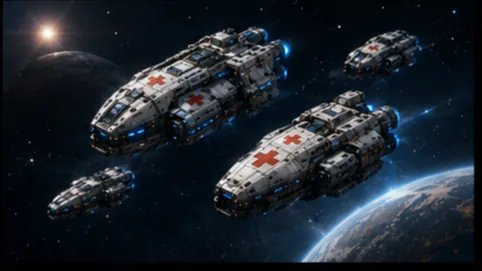
A fleet on approach to a planet, escorts trailing behind the lead hull.
Fair by design

The gap between deciding and resolving is the game. It is what makes a bad decision a real one, and what means a player in a different timezone is not at a disadvantage.

Planned and in design

What comes next

None of the following is in the game yet. No dates, no order implied, and nothing here is a promise. It is where the design is heading.

Race builderPlanned: design your own species at empire creation, traits, tolerances, the lot, instead of choosing one of the set races.
Governments and policiesPlanned: pick a government for its bonuses. Switching costs you, and the penalty fades over time, so you are never permanently locked in.
Ship service records and crewsPlanned: what a ship has been through starts to count for something, and veteran crews can move to a newer hull so progress carries.
Colony happiness and rebellionIn design: conquered colonies can revolt unless garrisoned, which gives troops a job after the shooting stops.
Credit economy and merchantsPlanned: a currency you cannot farm. A trickle from your capital, plus merchants who buy limited volumes. Tradeable between players.
Movable capitalPlanned: move your seat of power, on a long cooldown. If it falls, the next best colony takes over.
Expanded rankingsPlanned: leaderboards beyond size. Exploration, battles and more, each its own board.
Warp probesPlanned: scout the far side of a jump before you commit a fleet to it.
Recall for repairsPlanned: a damaged ship takes itself home to a shipyard for repairs, then rejoins its fleet.
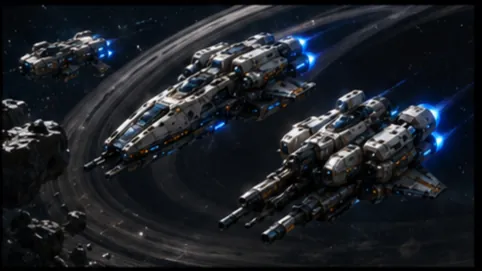
A formation of warships running in close order through open space.
Status

Where it is right now

Astral Sovereignty is playable now, free, in your browser or as an Android app. It is the same game either way, and the same empire. Two alpha galaxies are open, and you can join either today.

Astral Dawn ticks every hour, on the hour, and runs research, fuel, races and free-form ship design. Sovereign Reach 1 ticks every 30 minutes and runs without those four. It is winding down: it no longer receives most new features, and a replacement galaxy will take its place. Until then it keeps ticking as it is.

Choose how the game is drawn: the classic layout, in a wide version for a computer and a version for a phone held upright, the Mint layout, or Concept 02, a denser layout still being tried out. Six colour schemes and five colour-vision modes work in all of them.

Everything on this site is built and running, and it is still an alpha: systems are being added and changed while people play. You share each galaxy with NPC empires that give the same orders you do.

Play now

Join a galaxy, or follow along

The Discord is where development happens in the open, and where new galaxies are announced.

Free in your browser and on Android — the same galaxy and the same empire either way. Sign in with a mailed code or Google; there is no password to choose or forget.